
Listen to this article
If you have been waiting to refinance, you have been waiting a long time. The federal funds rate has been parked at 3.5 to 3.75 percent for most of 2025 and the start of 2026, and the 30-year fixed mortgage is sitting around 6.5 to 6.6 percent. The Fed's own projections do not show a major cut this year, and most economists expect at most a quarter point or two before Christmas.

Photo by Arturo Añez on Unsplash
That changes the financial playbook. Refinancing math does not work for most households yet. Cash sitting in checking is leaving real money on the table. Credit card balances are compounding faster than they did three years ago. Here is the move set that actually works at these rates.
A brief market scan, then we move on
The picture as of June 2026: 30-year fixed mortgage between 6.5 and 6.6 percent, 15-year fixed around 5.8 to 6.0 percent, HELOCs averaging around 7.4 percent nationally, credit cards around 22 percent on the average new card, high-yield savings accounts at 3.8 to 4.1 percent APY at top online banks, money market funds yielding similar.
Two takeaways from that scan. Borrowing is expensive across the board, and savings yields are actually competitive for the first time since 2007. The right plan leans hard into both.
Move one: pay down credit card balances aggressively
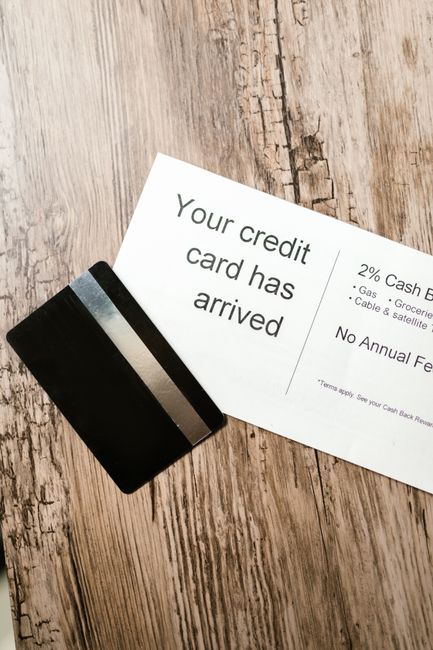
Photo by RDNE Stock project on Pexels
This is the unglamorous answer. A balance on a 22 percent card is compounding at a rate that no investment, savings vehicle, or side hustle can match risk-free. Paying down credit card debt is, mathematically, the highest guaranteed return available to a household with a balance.
The WIMM Debt Reducer puts this on autopilot. Pick a strategy (avalanche targets the highest APR debt first, snowball targets the smallest balance) and the Overview tab shows you the focus debt plus the exact extra payment to send this month. The "Plan This Month" card spells it out in plain English: which debt, how much, why, and what the projected payoff date looks like if you keep going.
The What-If tab lets you slide a lump sum or a monthly increase. A $5,000 tax refund, an annual bonus, a raise: drag the slider and watch the timeline collapse. People who have never done the math are routinely surprised at how few months an extra $200 a month carves off.
Move two: move the cash out of checking and into a real yielding account

Photo by www.kaboompics.com on Pexels
This one is fast money. The average checking account in the US pays close to zero. Top high-yield savings accounts and money market funds are paying around 4 percent APY in mid 2026. A household with $10,000 sitting in checking is leaving roughly $400 a year on the table for no good reason.
Open a high-yield savings account at one of the major online banks (Marcus, Ally, Wealthfront cash, SoFi, etc.) and link it to your existing checking. Keep about one month of expenses in checking for the float, and move everything above that line. The interest will accrue automatically. The cash is still liquid (one or two business days to transfer back).
In WIMM, add the new savings account on the accounts page. The Net Worth view will then count the higher yielding balance correctly, and the dashboard's account filter lets you see your "real cash position" by combining the two accounts together.
Move three: be patient about refinancing
If you bought a home at a rate above 7 percent in 2023, refinancing at 6.4 percent saves real money. The rule of thumb is to refinance when the rate drops by about 0.75 percentage points and you plan to stay in the home long enough to recoup closing costs (typically 18 to 36 months).
If you bought at 3 or 4 percent in 2020 or 2021, do not even think about refinancing into a higher rate. The math only works if you are taking cash out for something specific, and there are usually cheaper sources of that cash (HELOC, personal loan from a credit union, retirement loan as a last resort).
If you are in the middle (5 to 6.9 percent), the call is closer. Use a refinance calculator with your specific closing costs and the time you plan to stay. WIMM does not have a built-in refi calculator, but the Debt Reducer's Consolidation Modeler does an analogous calculation. Enter the new rate, term, and fee, and it tells you the break-even month. If your break-even is past the date you plan to sell, the refinance is not the right move yet.
Move four: choose savings goals that pay attention to yield
Most savings goals are still set up assuming cash earns nothing. With yields around 4 percent that assumption costs real money over a multi-year goal.
Two adjustments worth making in WIMM:
- For your Emergency Fund goal, target six months of expenses but assume the money sits in a high-yield savings account or money market fund. The interest accumulates with no effort.
- For longer term goals (12 to 36 months) like a wedding, a down payment, or a tuition fund, consider laddered CDs or short term T-bills. Top 1-year CDs are paying around 4 percent and short-term T-bills are in the 3.6 to 3.7 percent range, both FDIC or Treasury backed. Schedule the maturities to land near the goal date.
In WIMM, you can link the savings goal to the actual account it is funded from. The pace badge stays honest because contributions plus interest both count toward progress.
A note on student loans
For households with federal student loans, the rate is fixed and the optimization is different. The income-driven repayment landscape has shifted multiple times in the last two years, and the right move depends on your specific plan, balance, and income. The general principle still holds. Any loan above the 4 percent savings rate is profitable to pay down faster. Any loan below that line might be worth paying as scheduled while the cash earns more elsewhere. Run your specific numbers.
Where WIMM fits in the playbook
The Debt Reducer (Premium) handles the credit card payoff and the what-if scenarios. Savings Goals (free) track the cash building up in the yielding accounts. The Bills page and envelopes keep the monthly mortgage and rent clean. The Net Worth view is where you watch the whole picture turn the corner.
The live demo opens straight into the Debt Reducer with sample debts and savings already loaded, so you can move the sliders and watch the payoff timeline shorten in real time: app.wimm.money/demo?mode=debt.
References
-
Board of Governors of the Federal Reserve System. (2025, December 10). Federal Reserve issues FOMC statement. Retrieved from https://www.federalreserve.gov/newsevents/pressreleases/monetary20251210a.htm
-
Freddie Mac. (2026, June 11). Primary Mortgage Market Survey. Retrieved from https://www.freddiemac.com/pmms
-
Bankrate. (2026, June). Current HELOC rates. Retrieved from https://www.bankrate.com/home-equity/heloc-rates/
-
WalletHub. (2026, June). Average credit card interest rates for June 2026. Retrieved from https://wallethub.com/edu/cc/average-credit-card-interest-rate/50841
-
Bankrate. (2026, June). Best high-yield savings accounts of June 2026. Retrieved from https://www.bankrate.com/banking/savings/best-high-yield-interests-savings-accounts/
-
Federal Deposit Insurance Corporation. (2026, May). National rates and rate caps. Retrieved from https://www.fdic.gov/national-rates-and-rate-caps
-
Board of Governors of the Federal Reserve System. (2026, June 11). H.15 selected interest rates. Retrieved from https://www.federalreserve.gov/releases/h15/
Try WIMM today
The demo loads with realistic data and no signup. See what this article describes in action.